

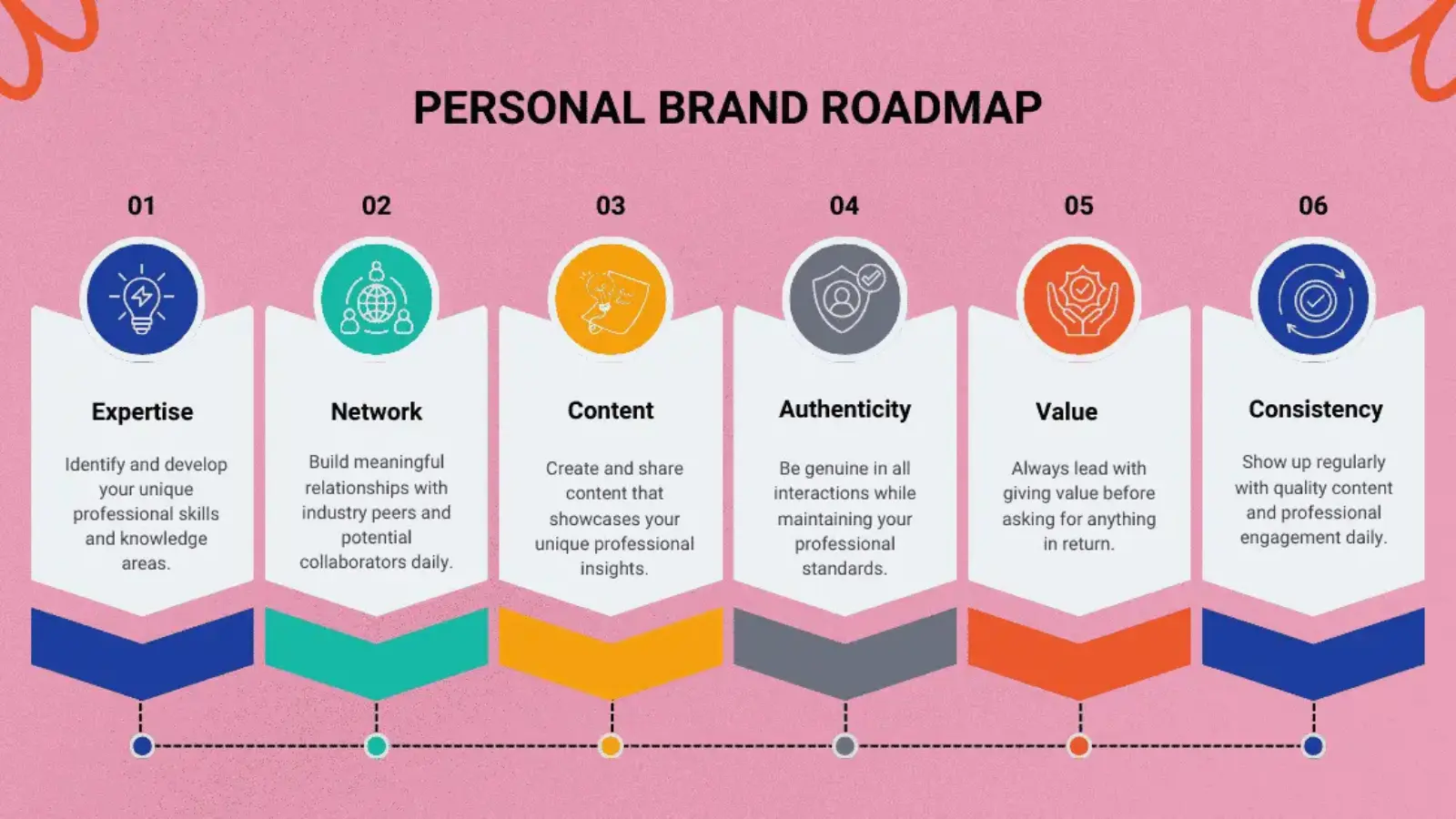
How to build a personal brand is the question every ambitious professional should be asking. Imagine this: You’re looking through LinkedIn and find two professionals with almost the same experience. Same industry, similar experience level, and similar skills. But one has 50,000 followers, a schedule of speaking gigs and companies contacting him with opportunities. The other is virtually overlooked, even though he’s every bit as good.
What’s the difference? He learned to strategically construct a personal brand.
I learned this lesson the hard way in my early days. Even with strong skills and impressive work, I was invisible in my industry. I realized that only after I deliberately began to create a personal brand for myself. Suddenly, I wasn’t just another face in the crowd. I was that go-to person people thought of when they needed someone who knew about my area of expertise.
If you’ve been asking yourself how to build a personal brand that will actually help propel your career forward, I’m here for that! Learning how to build a personal brand isn’t about becoming an influencer or posting selfies with motivational quotes. It’s all about having a strategy for setting yourself apart as the authority in your space using tested personal branding methods.
How to a Build Personal Brand: What Personal Branding Really Means
If you’ve ever been curious how to build a personal brand that actually advances your career, you’re in the right place. We’re not talking about becoming an influencer or sharing selfies with inspirational quotes. It’s all about positioning yourself strategically as your space’s in-demand professional using proven personal branding techniques.
What Is a Personal Branding Really?
A Personal branding is the art of marketing yourself and your career as a brand. It’s about determining what sets you apart (your value proposition), promoting your skill set with a consistent message across different mediums and become the professional that employers are drawn to. A compelling personal brand makes you a standout professional in your industry and an expert people want to turn to.
Consider someone like Gary Vaynerchuk. His name, you hear it and think: “Hustle entrepreneur wine master straight-talking business advice.” He didn’t just accidentally stumble into that reputation. He intentionally and persistently shared those values on every platform and interaction with them in sophisticated personal brand development strategies.
There are three things your personal brand should answer:
- Who are you professionally?
- What problems do you solve?
- Why should people care?
Finding Your Unique Value Proposition
Until you’re able to establish a personal brand, you need to know what makes you different. This isn’t about being a wild and crazy guy — this is about understanding that you bring a unique combination of skills, experiences, and perspectives to your work.
The Sweet Spot Exercise
Draw three overlapping circles. In the innermost circle, list your foundational skills and areas of expertise. In the second one, maybe list things you’re passionate about or interested in. For step three, list market demands or issues in your industry. That’s where your personal branding sweet spot lies, indeed wherever the three circles overlap.
For instance, maybe you’re in marketing. You may possess skills such as data analysis and content creation. Your passion might be sustainability. The market demand may be helping eco-conscious brands get in front of a younger consumer. Your new value proposition will be: “I’m helping conscious brands communicate with Gen Z through data-driven story telling.”
Mining Your Professional Story
As a personal brand, your own story is what you’re based on. What experiences have had the greatest impact on your professional outlook? What challenges have you overcome? How did you wind up where you are, via an unexpected path?
I used to work with a software engineer who was formerly a chef. Rather than suppress this “irrelevant” history, she put it at the center of her personal brand building campaign. She became recognisable for bringing creativity and a perfectionistic eye to coding from her culinary background. That distinct angle set her apart in the crowded space of food writing and got her hired at an up-and-coming food tech startup.
Action Steps:
- Describe your top 5 most valuable skills professionally
- List 3 experiences which have been most influential in shaping your career outlook
- Take note of what peers regularly turn to you for assistance with
How to Build a Personal Brand Message That Resonates
After you’ve found your void value, you need to deistic and convey that value in a way that resonates with your audience. This is a critical part of how to build a personal brand that attracts the right people.
The Three-Layer Message Framework
Layer 1: The One-Liner this is your professional headline what goes on your LinkedIn profile, email signature and business cards. It needs to be crisp, detailed, benefit-driven.
Layer 2: The Paragraph This adds context to your one-liner and gives it credibility. Use this in your LinkedIn summary, speaking bios and networking conversations.
Layer 3: The Story This is your entire story the problems, solutions and outcomes you have encountered or accomplished. Save it for interviews, detailed discussions and long-form content.
Consistency Across Channels
The underlying message of your content will be the same, but there will be variation across platforms and target audiences. The finance executive you meet at a networking event needs to hear your value proposition differently than the college student who’s following you on Twitter.
Action Idea: Write your brand message for these questions:
- Profile headline (120 characters)
- Networking event introduction (30 seconds)
- Conference bio (150 words)
- Standing in line chatting at a coffee shop (2 minutes)
Choosing Your Platforms Strategically
The mistake so many people (particularly solopreneurs and business owners) make when learning how to build a personal brand is that they try to be all things all the time. This is deadly! Rather than being a jack of all trades on every social media channel, select 2-3 where your target customers actually hang out and you can add value.
Platform Selection Guide
LinkedIn: Pretty much a must for anybody who’s not an artist. Good for B2B, thought-leadership and career-building content. This is usually the first site you learn to build when creating a personal brand online. Best for instant commentary on industry happenings and building connections with the right folks quickly. Great for tech, media and consulting professionals.
Instagram: Ideal if your work is visually-oriented anything from design, fashion, food and travel to lifestyle brands.
YouTube: Great for showing off your expertise with tutorials, interviews, or educational content. Very time consuming but works well for personal branding strategies.
Industry Platforms: Not to be forgotten are the more specialized platforms that your audience is using. Developers go to GitHub, designers go to behence, writers go to Medium.”
The 80/20 Platform Focus Rule
80% of your time should be focused on the primary channel (usually LinkedIn) and 20% will go towards maintaining a presence elsewhere. That way, you’re building real authority somewhere rather than being mediocre everywhere.
I had to learn this the hard way when I attempted to juggle active accounts on six of them. I had been sharing sporadically, my content was so-so, and I was failing to make real connections on any platform. As I began to concentrate on LinkedIn and Twitter with specific professional branding tips in mind, my engagement exploded and real opportunities came in.
Creating Content That Builds Authority
Many professionals get hung up at content creation when working to build a personal brand. They know they should be doing it, but they don’t know what to write about, or they’re afraid that their thought leadership isn’t very valuable.
Here’s the reality: you don’t have be one of the world’s foremost experts in your field to produce valuable content. You simply have to be a step ahead of them, and open to sharing what you’re learning as you go. The Edelman Trust Barometer consistently shows that people trust individuals more than institutions.
The Content Pyramid Strategy
Foundation Content (50%): Provide tips, trends and lessons learned. This is your bread and butter always useful content that showcases your expertise.
Examples:
“5 mistakes I notice companies make in their hiring process”
“What 100 Failed Startup Pitches Showed Me About This Year’s Best”
“The spreadsheet I used to save 5 hours a week”
Comments (30%): Respond to industry news/trends/popular posts. Contribute your point of view to existing discussions.
Examples:
Your thoughts about a big industry announcement
Why you hate a business best seller
Lessons learned from a recent business success or failure
Personal Content (20%): Share your experience, the behind-the-scenes and the human you. This creates connection and trust as well enables authenticity to your personal branding strategy.
Examples:
The lessons you learned from a career mistake
Your morning routine for productivity
A current challenge and how you are addressing it
The Authority-Building Formula
Teaching is one of the best personal branding tools. Each piece of content you create should be so informative that it makes your audience smarter than they were before reading it.
Use this simple formula:
- Hook: Begin with a loopy statistic, fact or opinion, striking example of an issue you’ll address, or popular problem
- Context: Connect the situation to your readers and viewers
- Solution: Share what you believe, your system and how you roll.
- Proof: Show examples, cases, or results.
- Action: Offer your readers somewhere to go next
Content Repurposing for Maximum Impact
Create once, share everywhere. Turn a LinkedIn post into Twitter threads, Instagram carousels and YouTube videos. One piece of cornerstone content can easily last you weeks’ worth of posts on social media.
For example if you’re writing a guile on project management, it can be segmented into its individual components:
- 10 unique LinkedIn posts showcasing each nugget
- A Twitter thread with key takeaways
- Instagram carousel showcasing visual tips
- A podcast that goes into the concepts more in depth
Personal Branding Networking Strategies
Creating a personal brand isn’t usually a solitary exercise. It’s creating real relationships in your industry and beyond. The best personal brands are supported by a network of people who know them, like them and trust them.
The Give-First Approach
Stop thinking of networking as people doing you favors. Reframe it as providing value. A Content Marketing Institute study found that consistent content creators see 13x more ROI. If you start from a position of generosity then the relationships will form and the opportunities will follow It is the same as passive networking people remember if you can help them.
Ways to Give First:
- Share something someone else produced, along with some thoughtful commentary.
- Connect people who need to meet each other
- Lend your skills to assist in resolving someone’s issue
- Suggest handy tools, resources or opportunities that may help others
Building Relationships Online
Social media has made it simpler than ever to connect with individuals from a professional perspective, but when you’re trying to learn how to build a personal brand from scratch there is definite room for strategy and authenticity.
The Engagement Strategy:
Find some 20-30 folks in your space that you actually like the content they are producing.
Interact with their posts 2-3 times a week in a meaningful way
Spread their content every once in a while with your own thoughts to supplement theirs
Direct personalized messages only when you have real value to provide
Don’t forget, you’re not trying to get contacts —you want real relationships. Quality vs. Quantity Quality wins over quantity every time when it comes to building an effective personal brand.
Offline Relationship Building
Don’t neglect in-person networking. No matter how you try to cut it, there is simply no substitute for the proprietary benefits of in-person industry conferences, local meetups, or professional associations.
Conference Networking Tips:
Research speakers and attendees beforehand
Think up intelligent questions on their work
Within 48 hours, a personal message should be the follow up.
You could trying making plans to work together or having frequent acquaintances or talking.
How to Measure a Personal Brand Success
How can you tell if it’s working when it comes to personal branding? You should be monitoring all the data about product usage and qualitative markers of success.
Quantitative Metrics
Reach Metrics:
Social media follower growth
Profile views and impressions
Site hits (if you have one)
Email list growth
Engagement Metrics:
Comments, shares, reactions on your article
Speaking invitation requests
Media interview requests
Inbound messages and connection requests
Opportunity Metrics:
Job interviews or offers
Client inquiries
Collaboration requests
Board positions or advisory roles
Qualitative Indicators
And sometimes the most significant progress can’t be quantified:
You start to become known for a certain topic or expertise
Your coworkers are starting to call you the “go-to person” for specific issues
You’re guest posting on industry publications or podcasting
Competitors begin to like and share your content
You have recruiters contact you about assignments that are a perfect fit for what your brand.
The Brand Audit Process
Do a quarterly personal brand audit:
Google yourself: What comes up in the first few results? Does it match your branding?
Check your content: Are you giving away the same value all of the time? Have you gotten the message?
Study engagement: What types of content does your audience favor? What are the most impactful subjects for dialogue?
Evaluate opportunities: Are you getting the right opportunities? If not, what do you need to change?
Maintaining Authenticity While Building a Personal Brand
One of the most common fears for professionals when it comes to building one’s brand is losing their authenticity. Both expressed concerns about becoming a “fake” version of themselves, or saying things they don’t actually believe in order to acquire followers.
This is a valid concern, but authenticity and branding are not mutually exclusive. But in general, the best personal brands are created on real expertise and real personality.
The Authenticity Framework
Be Selectively Transparent: You don’t have to give everyone insight into your life, but if you do, it should be real. Select parts of your professional story and persona that resonate with where you want to take your brand, and that aren’t too private for you to share.
Grow Naturally: Let your personal brand grow as you do. Let your brand evolve as your interests change or expertise grows. Intransigent consistency for its own sake can come off as inauthentic.
Admit What You Don’t Know: Being real is partly about being aware of what you don’t know. Don’t act like an authority when you’re still in learning mode. Instead, tell people about your learning journey sometimes it’s more valuable than giving the impression you already have all the answers.
Handling Controversial Topics
How to cover sensitive or controversial industry topics for each other: At some point, you’re going to have to make a decision on how you should approach covering controversial or touchy subjects in your industry. The secret is to develop a clear policy for yourself and stick to it unfailingly.
Some experts prefer to steer clear of contentious topics, focusing solely on the technical side. Others make being a thought-provoking contrarian part of their personal brand. There is no right or wrong choice the real key is just that you feel good about your decision and it jives best with what you are trying to accomplish in life.
If you do decide to take on hot-button issues, keep in mind:
- Focus on the policy, not mudslinging.
- Acknowledge different perspectives
- Expect dissent and criticism
- 50Be professional even when others don’t
- Personal Branding mistakes you should be avoiding
When you’re trying to build a personal brand, learning from others’ mistakes can save time and help to avoid damaging your reputation. The following are the top personal-branding mistakes I see professionals make:
Mistake #1: Attempting to Attract Everyone
When you become everything for everyone, you end up being nothing to anyone. A good, strong brand that speaks directly to the exact profile of the people you want to talk to is way more valuable than a blandish brand everyone can kind of relate to if they really try.
Mistake #2: Only Sharing Successes
A personal brand that’s all highlight reels doesn’t feel authentic, and it certainly doesn’t resonate. Share with your friends and followers your disappointments, struggles and teaching moments. Vulnerability resonates with people and they appreciate honesty about the stark reality of professional life.
Mistake #3: Inconsistent Activity
Posting five times in one week and not being heard from for a month will only leave your audience scratching their heads, and it will earn you demerits on most platforms. Better to post regularly at a manageable rate, than spam out content and burn yourself out.
Mistake #4: Me, me, and me
Track management that constantly sends out messages promoting themselves will not gain large readership. You know when every post is hawking your cheeseburger and fries and milkshake, no one takes you seriously. Adhere to the 80/20 rule: 80% of content of value to your audience, and don’t always be making it about yourself.
Mistake #5: Forgetting About Your Network
Don’t forget about the people who already know and trust you. Your contacts, connections and former customers are usually among your most enthusiastic advocates when it comes to career personal branding.
Mistake #6: Emulating Someone Else’s Brand
I think on some level we are all tempting to believe that if something works for one person then it can work for us too.
Although it is useful to look up to and study successful personal brands for motivation, directly copying someone else does not often turn out well. There is no-one, absolutely no-one else like you and you should let your brand reflect that.
Advanced Personal Branding Strategies
After you’ve learned how to build a personal brand, these advanced tactics can elevate your personal brand to the next level:
Thought Leadership Development
Transitioning from sharing insights to influencing industry conversations is much more strategic:
Identify White Space: See what there’s demand for in your industry that isn’t fully being covered. That might mean an under covered trend, a focused audience or a contrarian view that people need to consider.
Build Frameworks: Create unique methodologies, frames or models to solving problems in your industry. Those things become associated with your personal brand, and gives people a reason to link to your work.
Host Industry Conversations: Launch a podcast, lead panel discussions or host Twitter Spaces that are relevant to your domain of expertise. As a convener you are in the center of your industry.
Media and Speaking Strategy
Create a Media Kit:
Compile your bio, headshot, topics you can speak on and where you’ve been featured in media, all onto one sheet. Provide access to journalists and event organizers, who will find your value easy to grasp.
Create Signature Talks:
Developing 2-3 talks on their central themes that can be customized to various audiences. Being a frivolous speaker with polished, seasoned content is more attractive.
Build Media Relationships:
Follow reporters that cover your category. Share their articles, provide context in other peoples stories (especially while they are still learning the ropes), and make yourself available for comment.
Strategic Partnerships
Work With Like-Minded Brands: Work with professionals that have the same expertise as you. Collaborate Cross promote your work, co-song write content, create joint offers.
Advisory Roles: Joining advisory committees or acting as a consultant to startups can elevate your profile and grow your network, and you’ll gain insider insight on where the industry is headed.
Personal Brand Building Action Plan
It’s time to make your own road map, now that you know the principles and strategies. Here’s a structured plan on how to build a personal brand properly:
Week 1-2: Foundation Setting
- Do the unique value proposition exercise
- Audit your current online presence
- Selecting your primary and secondary platforms
- Update your LinkedIn subtitle with your new brand message
Week 3-4: Content Planning
- Use your expertise to brainstorm 30 content ideas
- Put together a content calendar for the month ahead
- Get your first piece of authority-building content
- Locate 20 professionals in the industry to contact
Month 2: Consistency Building
- Share content on a regular basis when it fits your schedule
- Commit to interacting with other’s content every day
- Send 5 connection requests a week, and personalize each one
- Track your metrics and engagement
Month 3: Optimization and Growth
- Understand what performed best and why
- Tweak your personal branding strategy according to what your audience is saying
- Apply to Speak at 1 Industry Event or Podcast
- Start forming relationships with journalists or influencers in your industry
Ongoing: Long-term Brand Building
- Conduct quarterly brand audits
- Keep evolving and sharing the goodness in life
- Try to grow your platform
- Iterate your message according to the market’s reaction
Frequently Asked Questions
Q: How many years does it take to create a personal brand?
A: Creating a personal brand that matters to people is going to be an effort over time, and it often requires at least 6-18 months for things to really add up. But you can begin to reap rewards in the early going — increased awareness, new relationships and improved opportunities — several months into your consistent practice of effective personal branding.
Q: Should I bring on a personal branding consultant?
A: Begin with the tactics in this guide, and seek professional assistance only if you have a big budget and targeted high-stakes goals.
Q: What if I work for a company with strict social media guidelines?
A: Read your company policies carefully and stay within them. Instead of anything company specific, focus on sharing industry insight, professional development content, and thought leadership. In fact, many employers value employees who develop thoughtful professional brands.
Q: What is your advice when it comes to negative comments or criticisms?
A: Respond professionally and helpfully to justified criticism. Accept where there’s truth and thank people for their feedback. If it’s trolling or abusive comments, don’t engage — just delete and block if necessary. Most citizens will appreciate how you deal with criticism.
Q: Should I set up a website around my personal brand?
Q. Is it necessary for me to have a personal website? Concentrate on building your presence on platforms that already exist and are known to generate work, then consider a website once you’re at the point where such an investment would benefit you — whether that be because you need more physical space to market yourself online, or because it will improve your Google search results.
Q: Is it difficult to separate personal branding from my 9-to-5?
A: You ease in, and you try to be efficient. Allocate 30-60 minutes daily into your branding activities—reading news in your industry, interacting with other people’s content, or drafting up posts. Take advantage of lunch breaks, commute and early mornings. The magic is in the consistency, not a monstrous block of time.
Q: What if my industry is ‘boring’?
A: What can the companies in your own industry teach you about building a personal brand. All industries will have obstacles, changes and insights that will certainly be helpful while learning how to develop a personal brand. The trick is to find the human stories, practical fixes and fresh angles in your beat. Given the path of least resistance, “boring” industries tend to be less noisy and have a lower level of competition for attention.
Question: How personal should I be in my professional brand?
A: Enough sharing of personal information to be relatable and human, but also professional boundaries. If personal interests, hobbies and family life will have a place in your brand if they are relevant to your professional identity or help people relate to you.
What to Do Next: From Reading to Building
You have the blueprint on how to build a personal brand that draws opportunity and advances your career. But learning about personal branding and being able to put those strategies in practice are two very different things. The people who win are the ones who keep taking action, not consuming input.
Now a bit of a challenge for you: Before you stop reading this article, do three things:
Use the framework supplied above to define your UVP.
Edit your Profile headline to be congruent with your branding message
Block off 30 minutes tomorrow to start creating your first piece of authority-building content
Personal brand development isn’t about getting famous or gaining thousands of followers. It is about putting yourself in a place where you will be found by the right opportunities, where your knowledge can be rewarded and appreciated, so that you can make the difference in the world that you are capable of.
Your professional identity is already being shaped each interaction, each thing you post (or don’t), every job you take adds to how people think about who you are professionally. It’s not even if you have a personal brand. The real question: Are you building it intentionally with proven personal branding strategies?
The best time to start building your own brand was 5 years ago. The second-best time is today.
Where do you take your first step? Let your resolution in the comments, and together let’s build a superstructure





1 thought on “How to Build a Personal Brand: Complete Guide for Professionals”